
What Does “Touch” Really Mean at a Haunted Attraction?
If you’ve been looking at haunted attractions this season, you may have seen something called a Touch Pass, Touch Option, or Dare to Be Touched upgrade.
But what exactly does that mean? And perhaps just as importantly—what does it mean when a haunted attraction doesn’toffer one?
The difference is worth understanding before you step through the door.
A Normal Haunted Attraction Is Generally “Touch-Free”
At most traditional haunted attractions, actors are not supposed to intentionally grab, push, restrain, or otherwise physically engage with guests.
That does not, however, mean you are guaranteed that nobody will ever make physical contact with you.
Haunted houses are intentionally dark. Actors may get extremely close. Hallways may be narrow, groups may bunch together, and performers may appear suddenly from places you weren’t expecting. It is always possible that you might accidentally brush against an actor, costume, prop, wall, or another guest.
Even at a touch-free attraction, there may occasionally be very subtle, non-aggressive contact used as part of the performance. An actor might lightly tap you on the shoulder to get your attention, for example, or offer you a hand and allow you to choose whether to take it. The important distinction is that this kind of interaction is brief, gentle, or clearly consensual—not grabbing, pushing, restraining, or physically forcing you to participate.
That is very different from intentional physical interaction.
The monsters may invade your personal space, but they aren’t supposed to physically engage you.
So What Is a Touch Pass?
A Touch Pass changes the rules.
Guests who choose the option are normally identified in some visible way, such as a wristband, glow stick, necklace, or another indicator, so actors know that guest has agreed to a higher level of physical interaction.
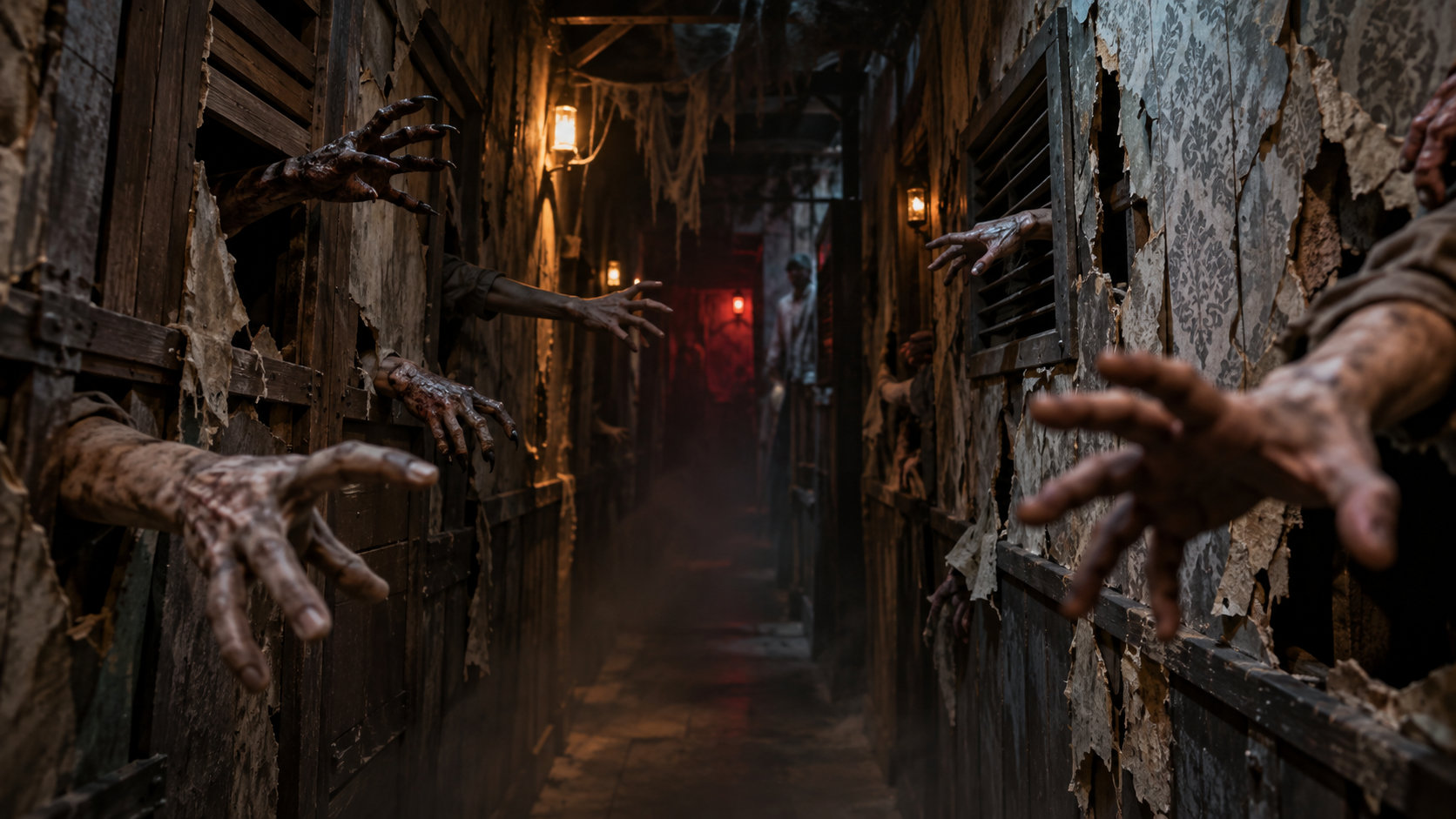
Depending on the attraction, actors might be allowed to touch or grab you, move you around within a scene, corner you, separate you from your group, or make you part of the performance.
And yes, that can make a haunted attraction significantly more intense.
But there is one very important thing to understand:
There is no universal definition of a Touch Pass.
Every attraction establishes its own rules.
At one haunt, a Touch Pass might mean an actor can put a hand on your shoulder or briefly grab your arm. Somewhere else, it might mean you could be pulled away from your group, placed into part of a set, or otherwise become an active participant in the scene.
Never assume that because you’ve experienced a Touch Pass at one haunted attraction, you know what another attraction’s Touch Pass allows.
Read the description and rules for the particular attraction before you purchase the upgrade.
A Touch Pass Does NOT Mean You Can Touch the Actors
This is probably the most important rule of all.
A Touch Pass gives the trained actors permission to interact physically with you under the attraction’s rules. It does not give you permission to touch them back.
The normal rules against grabbing actors, hitting them, pushing them, touching props, or damaging scenery still apply.
Think of it as agreeing to participate in a performance. not declaring a haunted house free-for-all.
Expect a Waiver or Release
Because intentionally adding physical interaction changes the experience and introduces additional risks, a Touch Pass also comes with additional acknowledgment of those risks.
Depending on the attraction and its ticketing system, you may be asked to sign a separate waiver or agree to additional release and assumption-of-risk language when purchasing or using the pass.
Read it.
A waiver isn’t just another box to click so you can get inside faster. It explains the type of experience you’re agreeing to and the risks associated with participating.
If anything in the Touch Pass description or waiver makes you uncomfortable, choose the traditional walk through instead. You can still have an extremely scary experience without physical contact.
Touch Passes at Tennessee Screams Attractions
Among the attractions participating in Tennessee Screams for the 2026 season, you’ll find both styles of haunted attraction.
Dead Man’s Farm — Dare To Be Touched
Dead Man’s Farm in Philadelphia offers a “Dare To Be Touched” upgrade for guests 18 and older.
According to the attraction, participants may be touched or grabbed, separated from their group, and even become part of the show. Their FAQ goes a step further and warns that participants may be cornered as part of the experience.
For 2026, the upgrade is listed at $5 when attending the Bludgeon Haunted House alone and $10 with the combination ticket covering both attractions.
Guests who do not purchase the upgrade are not intentionally touched, although Dead Man’s Farm points out that actors get very close and accidental contact with a costume or prop can happen.
The Scream Chamber — Touch Pass
The Scream Chamber in Athens also offers an optional Touch Pass for guests 18 and older, with identification required.
Their rules say Touch Pass participants may be touched, grabbed, or become a “victim” within the show. At the same time, participants are reminded that they still may not touch the actors or props themselves.
Reviews of the attraction provide a good illustration of how much difference the option can make. Reviewers who sent one person through with the Touch Pass and another without it reported noticeably greater actor interaction with the Touch Pass participant.
Avondale Haunted Barn — No Touch Pass
Avondale Haunted Barn in Rutledge follows the traditional touch-free model.
Its FAQ states that actors do not intentionally touch guests, although accidental contact is possible in the Barn’s dark environment. Guests are likewise prohibited from touching the actors or props.
Avondale’s current ticket offerings list General Admission, Fast Pass, and Season Pass options, but no Touch Pass.
The 13th Hour Haunted Trail — No Touch Pass
The 13th Hour Haunted Trail in Corryton also operates as a traditional no-touch attraction. Current attraction information describes it as an experience where guests will not be touched, and previous independent reviews likewise classify it as “No Touch.”
That doesn’t mean the actors won’t get close. It simply means intentional physical contact isn’t part of the performance.
Which Experience Is Right for You?
There isn’t a “better” version of a haunted attraction.
Some people love the added unpredictability of knowing that a character might grab them or pull them into a scene. For them, a Touch Pass can make an already immersive haunted attraction much more intense.
Other guests have absolutely no desire to be physically involved, and that’s perfectly fine. Traditional haunted attractions have been terrifying people for generations without needing to grab them.
If you are considering a Touch Pass:
- Read the attraction’s Touch Pass description carefully.
- Check the age requirements.
- Read the waiver or release before agreeing to it.
- Understand exactly what actors may be permitted to do.
- Remember that you still cannot touch the actors.
- If you don’t feel comfortable with the rules, don’t purchase the upgrade.
And remember that the rules can change from season to season. Always check the attraction’s current website or ticket information before you visit.
Know Before You Go
A good haunted attraction depends on trust.
The performers need to know where the boundaries are, and guests need to know what they’ve agreed to before entering.
For a traditional walk through, actors may get close enough to make you think they’re going to grab you—but intentional physical interaction generally isn’t part of the show.
Put on that Touch Pass, however, and you may have just given the monsters permission to do exactly what you were hoping they wouldn’t.
Choose wisely.